The Language of Statistical Cannabis
Cannabis Evolution, Genetics, and the Rapid Growth of the Cannabis Seed Market
The rapid growth of the cannabis seed market mirrors the explosive expansion of the broader marijuana industry. As legalization spreads across the United States and globally, cannabis has shifted from underground culture to a legitimate agricultural commodity. If marijuana reform accelerated overnight, the impact on Wall Street cannabis stocks, cannabis cultivation, and seed companies would be significant.
But understanding cannabis requires more than tracking marijuana stock prices or market trends. Just as analysts rely on data visualization and commodity charts, we must rely on scientific classification, cannabis genetics, and evolutionary biology to truly understand the cannabis plant.
Cannabis Classification: Beyond Indica vs Sativa
In the 19th century, naturalist Richard Owen introduced the idea of biological “archetypes” to help classify organisms. He distinguished between homologous structures (shared ancestry) and analogous structures (similar function but different origins). This framework improved how scientists grouped species based on anatomy and evolutionary relationships.
Today, cannabis is often forced into simplified archetypes like indica, sativa, and hybrid strains. However, modern research shows these categories are marketing shorthand rather than precise scientific distinctions. What truly defines a cannabis plant is its:
Cannabinoid profile (THC levels, CBD content, CBG, CBN, THCV)
Terpene profile
Genetic lineage
Cultivation environment
Relying solely on “indica vs sativa effects” oversimplifies the complexity of cannabis genetics and cannabinoid ratios. Just as biological archetypes are imperfect representations, cannabis strain labels rarely capture the full genetic and chemical diversity of the plant.
Cannabis Genetics and Evolution Through Natural Selection
Cannabis belongs to the Cannabaceae family, alongside hops and hackberries. From a scientific classification standpoint, cannabis falls within the order Rosales, a group that also includes roses. This shared ancestry is revealed through phylogenetics, the study of evolutionary relationships within the tree of life.
Tracing Rosales backward through evolutionary history shows that cannabis shares a common ancestor with other flowering plants. That ancestor no longer exists , demonstrating an essential truth: species are not permanent. Just as Tyrannosaurus rex disappeared through evolutionary processes, plant species also evolve, adapt, and sometimes vanish.
Cannabis is no exception. It does not possess a fixed, eternal “cannabisness.” Instead, it evolves through:
Natural selection
Environmental pressures
Genetic mutation
Selective breeding by humans
Modern high-THC strains, CBD-rich hemp varieties, and balanced cannabinoid cultivars exist largely because of human-guided cannabis breeding programs.
From Archetypes to Evolutionary Biology
Richard Owen viewed organisms as imperfect versions of ideal biological “types.” However, Charles Darwin’s theory of evolution by natural selection challenged this perspective. Darwin argued that species are not static designs but evolving populations shaped by adaptation.
This shift in thinking also applies to cannabis. Instead of trying to fit plants into rigid categories like “pure indica strain” or “true sativa genetics,” modern cannabis science embraces variation, hybridization, and evolutionary fluidity.
The idea that complex organisms must reflect perfect design was famously argued by William Paley’s watchmaker analogy, which suggested that complexity implies a designer. Darwin countered that nature contains both efficient and inefficient adaptations evidence of evolutionary processes rather than flawless design.
Similarly, cannabis displays both strengths and weaknesses in its genetic expression, resin production, cannabinoid synthesis, and terpene development. These traits evolve over time and are shaped by both environment and cultivation techniques.
The Cannabis Seed Market and Modern Cultivation
The booming legal cannabis seed industry reflects this evolutionary flexibility. Breeders now focus on stabilizing:
High-THC strains
CBD-rich hemp genetics
THCA flower cultivars
Balanced 1:1 CBD:THC strains
Rare cannabinoids like CBG and THCV
Advances in lab testing, genetic mapping, and cannabis cultivation technology allow growers to refine cannabinoid potency, terpene expression, and plant structure with greater precision than ever before.
But even with human intervention, cannabis remains part of the broader evolutionary tree of life. Without continued cultivation and selective breeding, wild cannabis populations would continue adapting independently through natural selection.
Cannabis Is Not Static It Is Evolving
The key takeaway is this: cannabis is not a fixed template. It is an evolving plant species shaped by genetics, environment, and human influence. Its position within the Rosales order, its shared ancestry within the Cannabaceae family, and its adaptation through natural selection remind us that marijuana is part of a dynamic biological system.
Understanding cannabis through plant taxonomy, evolutionary biology, cannabis genetics, and cannabinoid science provides a far more accurate framework than relying solely on traditional strain labels.
As the cannabis industry continues to grow, so will our understanding of its genetic complexity and evolutionary history. The more data we collect , through lab testing, cannabinoid analysis, and genetic research , the clearer the picture becomes.
Cannabis may not be permanent in its current form, but our scientific understanding of it will continue to evolve.
Cannabis Strains, Natural Selection, and the Evolution of Premium Flower
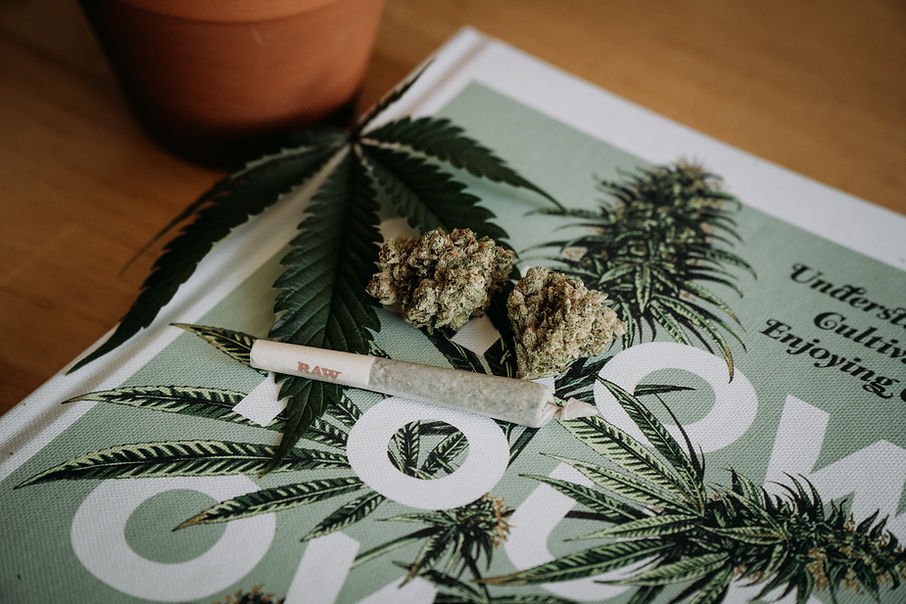
A carefully cultivated bunch of premium cannabis flowers your favorite high-THC strain, rich in aroma and terpene flavor , represents more than modern marijuana cultivation. It reflects thousands of years of plant evolution, genetic variation, and selective breeding.
To understand today’s cannabis strains, indica, sativa, and hybrid varieties we have to look deeper into biology and evolution.
Evolution, Imperfection, and Natural Selection
Nature is not flawless. Human anatomy itself reveals evolutionary leftovers: wisdom teeth that cause complications, blind spots in our vision, and blood vessels that partially obstruct light in the retina. In the animal kingdom, we see flightless birds like the kiwi and nearly sightless burrowing mammals such as moles. These traits are reminders that natural selection works with existing variations, not perfect designs.
In The Origin of Species (1859), Charles Darwin argued that evolution through natural selection explains biological diversity far better than the idea that species are fixed and unchanging. If species were permanent templates, the fossil record would show consistency. Instead, geological discoveries revealed gradual change, adaptation, and even mass extinction.
Darwin proposed that complexity arises through natural processes:
Superfecundity (overproduction of offspring)
Inheritance
Genetic variation
The struggle for survival
These forces drive evolution across all living organisms including cannabis.
Cannabis in the Tree of Life
Cannabis belongs to the Cannabaceae family, alongside hops and hackberries. In plant taxonomy, both cannabis and roses fall within the order Rosales, meaning they share a distant common ancestor. Modern genetic sequencing and phylogenetics confirm this shared evolutionary history.
Like all species, cannabis is not permanent. Just as dinosaurs like Tyrannosaurus rex disappeared, plant species evolve, adapt, and sometimes vanish. Cannabis has survived because humans cultivate, breed, and preserve it , especially as legalization expands and the legal marijuana industry grows.
Superfecundity and the Cannabis Seed Market
Cannabis clearly demonstrates Darwin’s concept of super fecundity. A single plant can produce dozens , even hundreds, of seeds in its natural environment. If every seed germinated and survived, the planet would quickly become overrun with cannabis plants.
But that doesn’t happen.
Most seeds fail to sprout. Many seedlings don’t survive environmental pressures. This competition ensures that only certain genetic variations persist. The same principle applies to human reproduction and to countless species across ecosystems.
This evolutionary pressure shapes cannabis genetics, cannabinoid expression, and terpene development.
Indica vs Sativa: Adaptation, Not Superiority
The debate over indica vs sativa strains often assumes one is better than the other. Evolution tells a different story.
Indica strains evolved in harsh mountain climates, often developing:
Shorter, bushier growth patterns
Dense buds
Higher resin production
Sativa strains adapted to equatorial regions, typically showing:
Taller growth structures
Airier buds
Longer flowering cycles
Neither is superior. Each is adapted to its environment.
The same principle applies to hybrid cannabis strains, which combine traits such as high THC potency, strong terpene flavor profiles, faster flowering times, or environmental resistance. When breeders combine desirable traits , for example, high potency and rich terpene flavor , they create new competitive advantages in the cannabis marketplace.
Survival of the Fittest in Cannabis Cultivation
“Survival of the fittest” doesn’t mean strongest or fastest. It means best suited to the environment.
In cannabis cultivation, this might include:
Resistance to mold or pests
Higher THC levels
CBD-rich genetics
Faster flowering cycles
Adaptation to indoor or outdoor growing conditions
Strains that “fit” market demand , such as high-THC flower, THCA strains, CBD-dominant hemp, or terpene-rich exotic hybrids , are more likely to be cultivated, reproduced, and preserved.
In nature, environmental pressures decide fitness. In modern cannabis breeding, both natural selection and artificial selection (human-guided breeding) shape outcomes.
Cannabis Is Evolving And So Is the Industry
The booming cannabis seed market and expanding marijuana legalization have accelerated selective breeding. Today’s cultivators use lab testing, genetic mapping, and cannabinoid analysis to refine:
THC potency
CBD content
Minor cannabinoids like CBG, CBN, and THCV
Terpene profiles
Yield and growth efficiency
But despite advanced cultivation techniques, cannabis remains part of the broader tree of life. It evolves through variation and selection, not fixed templates.
Indica is not inherently better than sativa. A strain bred for flavor is not objectively superior to one bred for potency. Preferences for exotic cannabis strains, high-THC flower, balanced hybrid strains, or CBD-rich hemp are subjective and driven by consumer demand.
The Bigger Picture
Cannabis, like all life, exists within evolutionary history. It adapts, changes, and diversifies through genetic variation and environmental pressures. Our favorite premium cannabis buds are the result of both natural selection and human innovation.
Understanding cannabis through the lens of evolutionary biology, plant taxonomy, and cannabis genetics offers a clearer picture than relying on rigid strain labels alone.
The plant continues to evolve, and so does our understanding of it.
Cannabis Strains, Genetics, and Population Thinking: Why No Strain Is “Inherently Superior”
There are no inherent values built into cannabis strains. No strain is scientifically “better” than another. Outside of reproductive fitness, the ability to survive, adapt, and pass on genes ,biology does not recognize superiority.
When we search for the perfect cannabis strain whether that means higher THC levels, stronger CBD content, or a richer terpene profile , we often create a mental archetype that doesn’t truly exist in nature.
Evolution is fluid. Our imagined “ideal strain” is fixed.
And that’s where confusion begins.
Indica vs Sativa: The Problem With Fixed Archetypes
When people debate indica vs sativa vs hybrid strains, they often treat these categories as rigid templates. But cannabis does not function that way biologically.
Think about variation in human populations. Even if we grouped individuals by age, eye color, or hair color, variation would still exist in countless other traits. No two individuals are genetically identical (outside of identical twins). The same principle applies to cannabis plants.
If we examine 1,000 cannabis plants labeled as the same strain, we will still observe differences in:
THC potency
CBD ratio
Terpene expression
Plant height
Flower density
Yield
Aroma and flavor
These differences exist because cannabis is not a fixed blueprint ,it is a population of genetic variation.
Cannabis as a Population, Not a Template
In biology, this perspective is called population thinking. Instead of seeing cannabis as a static “type,” we recognize it as a population of shifting genetic traits.
This moves us into the measurable realm of population genetics one of the most important concepts in modern cannabis science.
Rather than asking:
“Which cannabis strain is best?”
We should ask:
“What traits are most common in this cannabis population?”
Now we’re talking about something testable and scientific.
Cannabis Genetics: What’s Actually Changing?
What fluctuates within cannabis populations are genes.
Through meiosis the process of sexual reproduction in plants genes from male and female cannabis plants combine to form new genetic combinations. These combinations influence:
Cannabinoid production (THC, CBD, CBG, CBN, THCV)
Terpene profiles
Flower structure
Resin production
Growth rate
Resistance to pests or mold
Genes are sequences of DNA that are expressed as observable traits, known as the phenotype.
A cannabis phenotype includes what you can:
See (bud structure, color, trichomes)
Smell (aroma)
Taste (flavor profile)
Feel (effects)
But phenotype is influenced by both genetics and environment meaning grow conditions, lighting, nutrients, and stress factors can all affect final expression.
Shifting Gene Frequencies in Cannabis Breeding
When we talk about “fluctuating genes,” we’re really talking about changes in gene frequency within a cannabis population.
For example:
If consumers prefer high-THC flower, breeders select plants with stronger THC expression.
If demand grows for CBD-dominant strains, breeders select for higher CBD ratios.
If fruity terpene profiles become popular, plants expressing those terpenes are crossed more often.
Over time, these preferences shift gene frequencies across the cannabis seed market.
This is artificial selection layered on top of natural selection.
Artificial and Natural Isolation in Cannabis Cultivation
The global cannabis population includes every living cannabis plant. But populations become divided through:
Artificial Boundaries
Indoor grow rooms
Controlled breeding programs
Seed banks
Commercial marijuana cultivation facilities
Environmental Isolation
Climate differences
Geographic separation
Flowering time mismatches
Pollination timing
These forms of isolation create sub-populations where certain genes increase while others decrease.
Over time, this leads to:
More uniform hybrid strains
Reduced genetic diversity in some cultivars
Highly stabilized commercial cannabis varieties
Survival of the Fittest In the Marketplace
In nature, genes can disappear permanently. If pollinators favor one trait over another, the less favored gene may vanish from the population.
In modern cannabis breeding, consumer demand plays a similar role.
If certain terpene profiles or cannabinoid ratios fall out of favor, breeders stop reproducing them. Those gene combinations may slowly disappear from commercial cultivation.
Conversely, when a new hybrid strain combines:
High potency
Unique terpene aroma
Strong yields
Disease resistance
That strain’s genes spread quickly through the market.
But none of this makes a strain “inherently superior.” It simply means it fits current environmental or economic conditions.
What Is Cannabis, Scientifically?
From a biological and genetic standpoint:
Cannabis is a plant population characterized by shifting gene frequencies expressed as observable phenotypes.
That’s it.
It’s not an archetype.
It’s not a perfect template.
It’s not a fixed idea of “indica-ness” or “sativa-ness.”
It’s a dynamic genetic population constantly evolving through:
Natural selection
Artificial selection
Environmental pressures
Consumer demand
Breeding practices
Why This Matters for Strain Selection
When choosing your favorite cannabis strain whether you prefer:
High-THC indica strains
Energizing sativa strains
Balanced hybrid cannabis
CBD-rich hemp flower
Terpene-heavy exotic cultivars
Remember: you’re selecting traits from a shifting genetic population not chasing a perfect biological template.
Understanding cannabis genetics, phenotype variation, and population thinking gives you a more accurate and scientific way to think about marijuana cultivation and strain diversity.
And it removes the myth that one strain is universally “better” than another.
Because in biology, superiority doesn’t exist.
Only adaptation does.